


Related articles



Share with friends


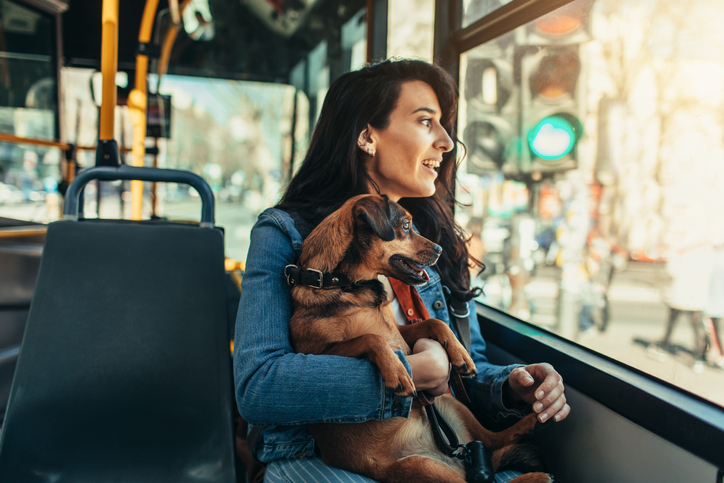
Public transport is not just a mode of commuting for the two-legged, as there is increasingly public discourse supporting pets on public transport in Australia. From emotional support for pet owners to greater access to veterinary services to reduced carbon paw-print, there are many benefits in making it easier for companion animals to travel on our buses, ferries, trains and light rail.
There have been recent media reports about renewed calls to allow companion animals on public transport in Sydney, including Mayor Clover Moore who is set on changing the current “restrictive policies about pets on public transport” citing more relaxed rules in other cities like San Francisco, Paris and London.
With pet ownership in Australia at an all-time high^, many pet parents advocate for pets to be allowed in more public places and facilities. PetSure surveyed 1,000 pet owners in April 2023* and asked respondents which places pets should be allowed for the purpose of providing an emotional benefit to people, with nearly half of respondents saying pets should be allowed on public transport. Respondents also cited retirement villages (77%), mental health clinics (67%), hospitals (55%), and the workplace (50%) as places where pets should be permitted.
In this article, we unpack some of the benefits for allowing pets on public transport and the current rules in each state and territory.
Benefits to allowing pets on public transport
- Emotional Support: Pets are often a source of emotional support and companionship for pet owners as the presence of a pet can help reduce feelings of anxiety or stress. Pets may also increase social interaction among passengers on public transport.
- Greater veterinary access: Some pet parents may not have access to a private vehicle or they may be unfit to drive themselves, so allowing pets on public transport means people can more easily access veterinary services. This could also encourage more regular vet visits, ensuring the early and timely detection of potential pet health issues, which could support better animal welfare outcomes.
- Lower carbon paw-print: If pet owners can rely on public transportation instead of private vehicles, it results in less cars on the roads which decreases traffic congestion and ultimately reduces greenhouse gas emissions.
- Inclusivity: Pet-friendly public transport supports greater inclusivity, accommodating individuals with disabilities or medical conditions that require them to travel with service animals.
PetSure’s position is that restrictions on pets accessing existing public infrastructure creates barriers, particularly for disadvantaged and vulnerable pet parents. These restrictions reduce accessibility to veterinary care, pet food and essential supplies. They also make human and pet exercise more difficult and with the lack of public transport options, forcing more motor vehicles onto the road. We see a role for PetSure in helping to normalise pet accessibility on public transport and increase pet access to beaches and other public places.
What are the current rules in each state?
Service animals are generally allowed on public transport in all states. However, when it comes to pets the ability of animals to travel on buses, light rail, ferries, and taxis, is often limited and up to the discretion of the driver and crew members.
In NSW, assistance animals with a valid form of accreditation are allowed on public transport.
Pets may be allowed on buses, ferries and light rail if confined in a carrier as stipulated by the Passenger Transport (General) Regulation 2017. Animals are prohibited from travelling on Sydney and regional train services and stations.
To see how the rules differ by transport mode, check out the Transport NSW website: Travelling with animals and pets | transportnsw.info
In VIC, guide dogs, hearing dogs and assistance animals can travel on all public transport services. As for small companion animals or pets, they can travel on some modes of transport if they are in a suitable container.
For more info, visit: Animals on public transport – Public Transport Victoria (ptv.vic.gov.au)
Queensland Rail generally permits guide, hearing or assistance dogs that are trained and animals that meet the assistance animal requirements (Assistance Animals (queenslandrailtravel.com.au)) as referenced in the Disability Discrimination Act 1992, with an approved Assistance Animal Pass.
Transperth, the public transport provider in Perth, allows assistance dogs on its services and states assistance dogs must be clearly marked and in a harness at all times. The Transperth website (Animals on Transperth services)states that it does not permit any other animals on their services.
According to Adelaide Metro, pet owners can take accredited assistance animals on public transport (Animals – Adelaide Metro). However, pets are generally not allowed on board.
The Tasmanian Government doesn’t have information regarding animals on public transport.
In the ACT, assistance animals can access all public transport services, including guide dogs, an animal being trained to assist a person with a disability and pets when they are confined in a carrier (for light rail and bus only, with the driver’s permission).
Policies regarding pets on public transport in the NT can vary. Small pets in carriers may be allowed on some forms of transport.
To facilitate pet-friendly public transport, each state and territory government should design and enforce more comprehensive guidelines to ensure the safety of all passengers. This may include putting in place rules or legislation to manage potential issues – such as allergic reactions among passengers, noise, fears related to certain animals and ensuring cleanliness and hygiene on board.
Allowing pets on public transport isn’t just about convenience, it’s about creating urban environments that are inclusive and reflective of social changes and the needs of all Australians.
^*Animal Medicines Australia, Pets in Australia: A national survey of pets and people, 2022
*PetSure surveyed 1,000 dog and cat owners nationwide across Australia from 14 to 17 April 2023. Research supplied by PureProfile.
Pet insurance can help by covering a portion of the eligible vet bill if the unexpected happens. Because it is difficult to predict the costs of veterinary care, it can help to have measures in place to help prepare for the unexpected. Check out our partner network and explore our policy tools to find a pet insurance policy.
Not all conditions or items are covered by Pet Insurance. Refer to the applicable Product Disclosure Statement for information about coverage and exclusions.

